
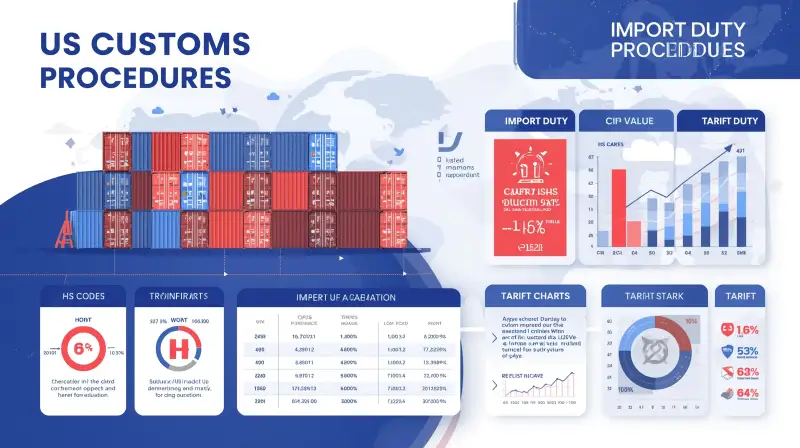
Understanding US Import Tariffs Easily
What Is a US Import Tariff? A Complete Beginner-Friendly Explanation
A US import tariff is a mandatory tax charged on goods entering the United States from another country. Whenever you import products—whether electronics, clothing, accessories, commercial shipments, or personal packages—the U.S. Customs and Border Protection (CBP) applies a specific duty rate based on product classification, HS codes, and the value of the shipment. These tariffs protect domestic industries, regulate international trade, and generate federal revenue.
Understanding tariffs is extremely important because they directly affect the final cost of imported goods. Even a small percentage difference in tariff rate can significantly change the total landing cost of your shipment. This is why importers use tools like the US Tariff Calculator at https://ustariffcalculator.us/ to estimate exact customs duty quickly and accurately before importing anything.
Why US Import Tariffs Exist
The United States government uses tariffs for several important purposes. Tariffs help prevent unfair competition from foreign manufacturers, especially in cases where other countries sell goods at extremely low prices. Import taxes also ensure that local industries, such as manufacturing, agriculture, and technology sectors, remain competitive in the domestic market.
Tariffs also act as a tool for maintaining fair trade practices. When foreign goods enter the U.S. market at unfair prices, the government may introduce anti-dumping duties or countervailing tariffs. In addition, tariffs generate billions of dollars in federal revenue each year, supporting national infrastructure and development programs.
How US Import Tariffs Are Determined
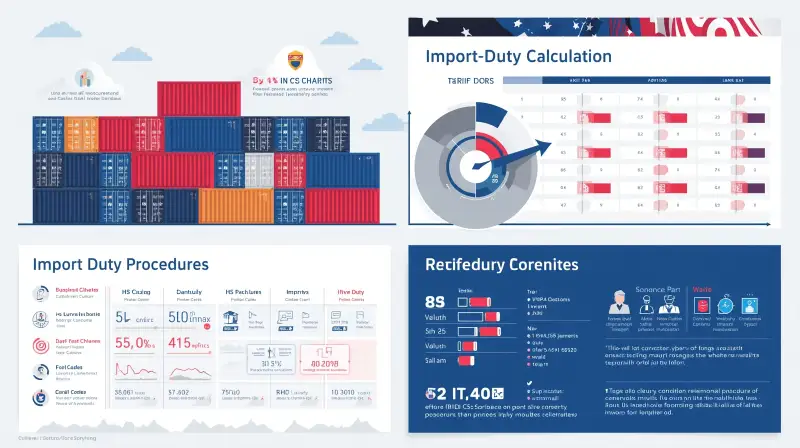
Tariff calculation may seem simple at first, but in reality, it depends on several factors that CBP examines carefully. Every import is evaluated through a structured system designed to ensure accurate classification and fair taxation. The main factors that determine tariff rates include:
Product Type
Every product category—clothes, electronics, household items, automotive parts—has a different tariff rate.
HS Code Classification
The Harmonized System (HS) code is a universal classification system used globally. This code defines the type of product and determines the duty percentage. For example:
- Electronics often fall under HS Code 85
- Clothing under HS Code 61 or 62
- Footwear under HS Code 64
Choosing the wrong HS code can lead to incorrect tariff charges and penalties from CBP.
Country of Origin
Goods imported from different countries can have different tariff rates.
- Products from China may have additional Section 301 tariffs
- Products from Mexico and Canada may qualify for zero duty under USMCA
- Goods from certain developing countries may qualify for lower tariffs under special trade programs
Declared Value
CBP checks the invoice value of the product carefully. Under-declaring value to reduce tariffs can lead to fines, shipment delays, and future import restrictions.
Shipping and Insurance Cost
Tariffs are calculated using CIF value:
Cost + Insurance + Freight
This means shipping and insurance are also included in the taxable amount.
Understanding CIF Value in Tariff Calculation
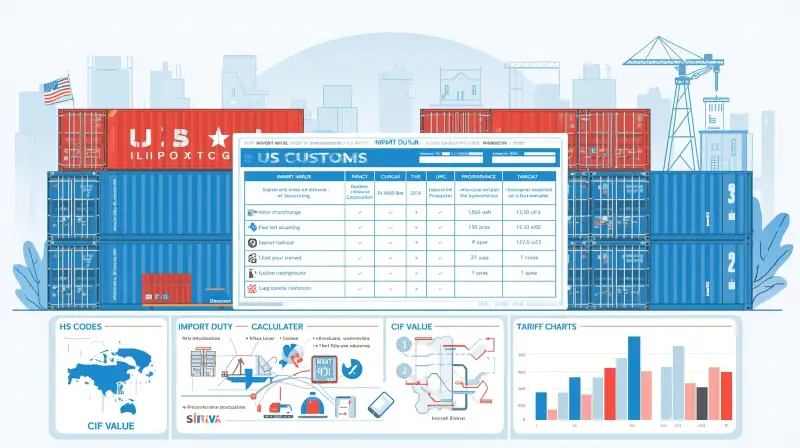
CIF value is one of the most important components in customs duty calculation. It represents the total cost involved in getting the product from the seller to the U.S. port. Tariff is not calculated only on product cost; instead, it includes:
- Product price
- Shipping cost
- Insurance cost
If you import a product worth $200 with $30 shipping and $5 insurance, your CIF value becomes $235. Duty percentage is applied on this total amount, not just the product price.
To avoid mistakes while calculating CIF and duty rate, many importers rely on the US Tariff Calculator available at https://ustariffcalculator.us/.
How US Import Tariffs Are Calculated Step-by-Step
Even though tariff calculation looks complicated, once you break it down, the formula becomes easier to understand.
Step 1 — Identify the Correct HS Code
The HS code determines the exact tariff percentage. Incorrect classification leads to incorrect duties and penalties.
Step 2 — Check the Invoice Value
This includes the base price of your product.
Step 3 — Add Freight and Insurance
CBP includes shipping and insurance in the taxable amount.
Step 4 — Apply Duty Percentage
Every HS code has a specific tariff rate. Some items have 0% duty, while others may go as high as 25% or more.
Step 5 — Add Additional Fees (If Applicable)
Some shipments may include:
- Merchandise Processing Fee (MPF)
- Harbor Maintenance Fee (HMF)
- State-level taxes
For most small importers, MPF is the most common additional fee.
If you want to skip all these manual steps, the US Tariff Calculator at https://ustariffcalculator.us/ instantly computes the exact customs duty based on your product’s specifications.
Practical Example of Tariff Calculation
Let’s take a simple example to understand tariff calculation clearly.
Product: Headphones
Product Value: $50
Shipping: $10
Insurance: $2
CIF Value: $62
Duty Rate: 8%
Tariff = $62 × 8% = $4.96
This amount does not include MPF or HMF if applicable. If you want an accurate, automated calculation, simply enter values into:
https://ustariffcalculator.us/
Common Mistakes Importers Should Avoid
Incorrect HS Code
This is the most common mistake and leads to overpayment or underpayment of duties.
Under-Valuing Goods
Importers sometimes declare lower values hoping to reduce tariffs. This can lead to penalties, shipment seizure, and long-term red flags on your importer profile.
Ignoring Trade Agreements
You may qualify for reduced or zero duty under USMCA, GSP, or other trade agreements. Many importers miss this benefit.
Not Accounting for Additional Fees
Duties are not the only charge. MPF, HMF, handling charges, and brokerage fees also impact final landing cost.
Manual Calculation Errors
Tariff and tax calculations involve multiple components. Manual errors are common, which is why online tools like US Tariff Calculator are recommended.
How Tariffs Affect the Final Cost of Products
Import tariffs can significantly impact retail pricing. A small percentage increase in tariff can make products more expensive for customers. Businesses importing goods in bulk need accurate tariff forecasting to maintain profit margins and price competitiveness.
If you want to estimate final landed cost before placing an order with a supplier, simply use:
https://ustariffcalculator.us/
Conclusion
A US import tariff is a mandatory tax on goods entering the United States, calculated using CIF value, HS code, origin country, and duty rate. Understanding how tariffs work helps importers predict costs accurately and avoid surprises during shipment clearance. The easiest and most reliable way to calculate tariffs is by using the US Tariff Calculator at https://ustariffcalculator.us/, which instantly provides exact duty estimates without any manual effort.
FAQs
What is a US import tariff?
A tax charged on goods imported into the United States based on HS code and product value.
How do I calculate import duty?
You can use the US Tariff Calculator: https://ustariffcalculator.us/
Is shipping included in tariff calculations?
Yes, customs duty is applied on CIF value which includes cost, insurance, and freight.
Do all products have import tariffs?
Most commercial goods do, except special exemptions or agreements.
What happens if I declare a wrong HS code?
Incorrect duties, delays, or CBP penalties may occur.